No solvents, no blast media
No chemical procurement, no spent grit to dispose of, no containment tents around the workpiece.
Simple Laser · Laser technology for export
Laser cleaning in two working modes — 1.5 to 3 kW continuous and 100 to 300 W pulsed — plus a handheld laser engraver for marking and traceability. CE-tested, documented, and supported long after the sale.
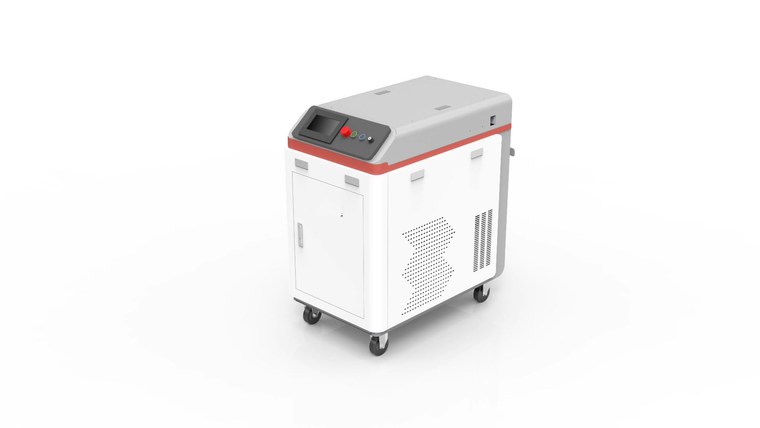
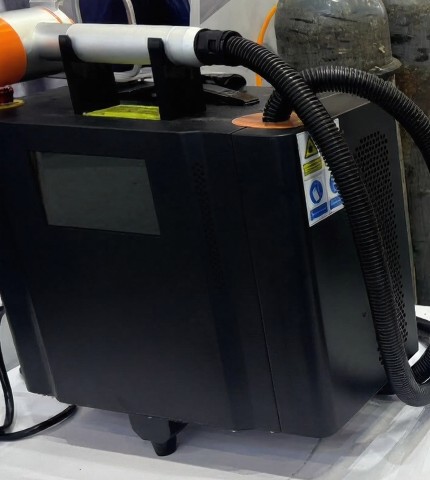
Simple Laser supplies industrial laser cleaning systems from Shanghai: 1.5–3 kW water-cooled continuous wave units for rust, paint and mill scale, and 100–300 W air-cooled pulsed units for moulds, tooling and thin sheet. Both families are CE-tested, reports issued May 2026. Export licensing is settled in writing before a price is quoted.
1.5 – 3 kW continuous wave and 100 – 300 W air-cooled pulsed. Rust, paint and coatings off the substrate, no chemicals, no grit.
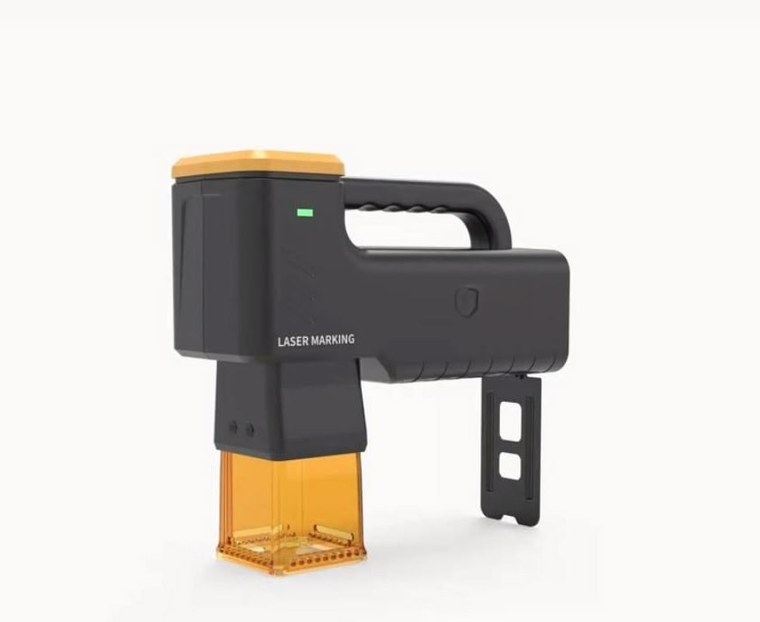
See the systemsHandheld engraver for traceability, nameplates and signage — carried to the workpiece or docked as a bench unit.
See the engraverWelding, cutting, automation and 3D five-axis systems from our manufacturing partner — one channel, one quotation.
Explore the rangeMill scale and rust removal on carbon steel.
See it work
No chemicals, no grit, no secondary waste. The layer leaves the surface; the substrate stays as it was machined.
Send us your part or a scrap piece. We run it, film it, and return the video with the parameters used — power, frequency, scan speed — so the result is reproducible on your floor.
Product lines
Three core lines, each matched to the application before anything is quoted.
Applications
Each case below replaces a process that is being regulated away, priced out, or holding up the next stage of work.
Hull plates, decks, weld seams before coating.
Mill scale and old coatings before re-welding.
Bogie frames, underframe corrosion, repair welds.
Tower sections, flanges, bolted joints.
Surface prep where grit and dust are banned.
Rebuild and resale preparation.
Release agent and residue, geometry untouched.
Where CW heat would distort the part.
Sustainability
Laser ablation replaces the processes European regulation is pricing out: solvent stripping, sandblasting, chemical pre-treatment. Nothing is applied, nothing is dumped — the contaminant is extracted at the source.
No chemical procurement, no spent grit to dispose of, no containment tents around the workpiece.
Fewer permits, fewer exposure assessments, simpler insurance conversations — a real cost line, not a slogan.
Material is removed selectively and the base metal is preserved — parts are re-coated and returned to work, not scrapped.
Why Simple Laser
We match the system to the application before anything is quoted — 3 kW for mill scale on a hull, 200 W for tooling.
Export classification and CE documentation confirmed in writing, per configuration, before an order is placed.
Spare parts with a stated lead time on every item, and a named contact for as long as the machines are in the field.
Tested & documented
Third-party reports from accredited laboratories, on file and shared under NDA with serious enquiries. Details on the Compliance page.
Next step
Spec sheets, configuration options and indicative pricing on request — with the compliance position, in writing, within one working day.
Request a spec sheetFAQ
The answers we give on the phone before a quotation is written.
Rust, paint, mill scale, oxide, coatings and grease from steel, stainless steel and aluminium. The layer is ablated by the beam and leaves the surface as a vapour and dust; the substrate stays as it was machined. There is no grit to sweep up, no solvent to dispose of, and no secondary waste stream.
1.5 kW covers maintenance work and touch-up at a few square metres per shift. For hull plates, structural steel, tank shells and tower sections on a production schedule, 2 to 3 kW is the working range — at 3 kW the comparison stops being laser versus sandpaper and becomes laser versus a blasting crew, with its containment, permits and disposal costs.
Continuous wave removes the layer without cutting into the substrate once the parameters are set to the material. Where the substrate matters more than the speed — moulds, tooling, thin sheet, weld seams, coated parts — the 100–300 W pulsed line is used instead: the layer comes off and the base material does not change colour, warp or anneal.
Yes. Both families were tested as product families by an accredited third-party laboratory in Shenzhen, reports issued May 2026 against the EMC Directive (2014/30/EU) and the Machinery Directive. A conformity verification (VoC no. ICR/VC/HFH260516) covers the same family and is valid to 21 May 2031. Report copies and the draft Declaration of Conformity are sent with a quotation.
We sell to distributors, integrators, service contractors and end users. Private label is available: housing colour, decals, manual language and packaging under your brand, with the technical file prepared for the entity named on the badge — because under EU Regulation 2023/1230 the badge owner is the manufacturer.
Send the application: substrate, layer, area per shift, access, power available on site, and destination country. Price depends on the configuration and, for pulsed units, on the export-classification position — both are settled first. Enquiries with an application description are answered within one working day.